The Bread & Salt Welcome: A Timeless Russian Tradition of Hospitality

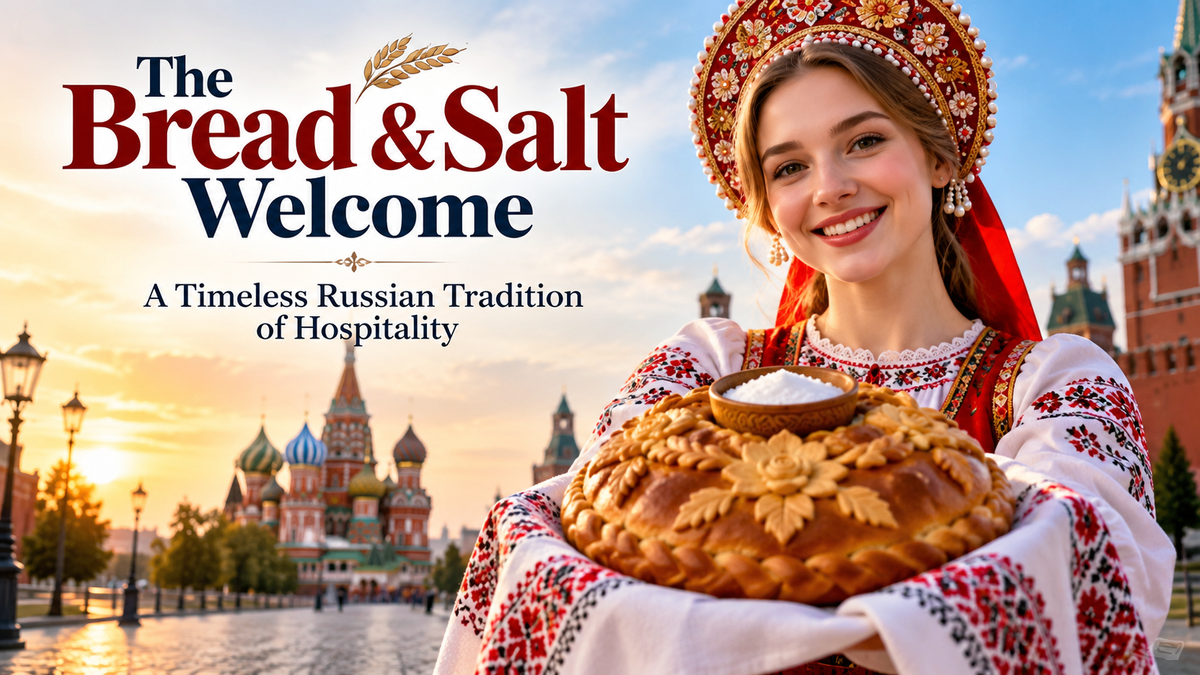
Imagine arriving somewhere as an honoured guest. Instead of a simple handshake or a greeting at the door, you are welcomed with a freshly baked loaf of bread and a small dish of salt. It may seem unusual at first, but in Russian culture, this gesture carries a meaningful message: You are welcome here.
Known as “Хлеб-соль” (Khleb-Sol), meaning “Bread and Salt,” this traditional welcome reflects the importance of hospitality, generosity, and respect in Russian culture. It is more than an offering of food; it is a symbolic way of making a guest feel valued.
What Does Bread and Salt Symbolise?
Bread and salt may be everyday items today, but both have held special significance throughout history.
Bread: A Symbol of Life and Prosperity
For generations, bread has been an essential part of daily life in Russia. It represents nourishment, well-being, prosperity, and the ability to provide for others.
Offering bread to a guest is therefore a way of sharing what one has and expressing a sincere wish for the guest's comfort and happiness. It communicates generosity without the need for many words.
Salt: A Sign of Respect and Friendship
Salt was once a valuable commodity and an important part of preserving food. Because of its value, sharing salt could represent generosity, trust, and a willingness to build a connection with another person.
Together, bread and salt became a powerful symbol of hospitality. The bread represents nourishment and abundance, while the salt adds a sense of value and respect to the welcome.
How Does the Bread and Salt Welcome Work?
In a traditional ceremony, the bread is often presented on an embroidered towel called a rushnik. The loaf may be a round ceremonial bread known as a karavai, with a small container of salt placed on top or beside it.
The bread is usually presented by a host or a group of people welcoming the guest. The guest may then break off a piece of bread, dip it into the salt, and taste it. The exact details can vary depending on the occasion and local customs.
The presentation itself is an important part of the experience. The carefully prepared bread, traditional towel, and respectful manner of offering it all help communicate the sincerity of the welcome.
Although the ritual may appear formal, its message is simple: We are happy to receive you, and we want you to feel at home.
A Tradition with Deep Historical Roots
The bread and salt welcome developed from a long-standing culture of hospitality in Russia and other Slavic communities. When travel was difficult and journeys could be long, welcoming visitors and sharing food were important ways of showing care and goodwill.
Over time, the tradition became associated with receiving distinguished guests, welcoming important visitors, and marking significant occasions. Bread and salt also became part of Russian wedding customs, where the ceremonial loaf could represent prosperity, unity, and wishes for a couple's future.
The tradition has continued into modern times, particularly during formal receptions, cultural celebrations, and ceremonial welcomes. It can still be seen when guests, delegations, or visitors are received on special occasions.
However, it is important to understand that bread and salt are not presented to every visitor in everyday Russian life. Today, the custom is generally reserved for particular occasions where a traditional and meaningful welcome is appropriate.
Why Is This Tradition Still Relevant Today?
In a world where greetings are often quick and informal, the bread and salt welcome offers a reminder that hospitality can be expressed through simple, thoughtful gestures.
The tradition is not only about food. It is about the relationship between the host and the guest. By offering something as essential as bread, the host demonstrates a willingness to share. By receiving the offering, the guest becomes part of a moment built around mutual respect.
It also reflects an important aspect of cultural identity. Traditional customs help connect people with their history, preserve shared values, and pass cultural knowledge from one generation to another.
For international visitors, understanding this tradition offers a glimpse into how Russian culture expresses warmth and respect. It shows that hospitality does not always depend on elaborate gifts or grand gestures. Sometimes, it begins with something as simple as a piece of bread and a little salt.
More Than a Greeting: A Message of Welcome
The Russian bread and salt tradition is a beautiful example of how ordinary objects can carry extraordinary meaning. A loaf of bread and a small amount of salt become symbols of generosity, friendship, prosperity, and respect.
Whether encountered at a cultural event, a wedding, or a formal reception, the ritual invites people to look beyond the food itself and understand the message behind it.
In Russian culture, bread and salt are not simply offered to a guest. They represent an invitation to share a moment, build a connection, and feel welcome.
And perhaps that is what makes this tradition timeless: wherever people gather, the desire to welcome others with warmth and sincerity remains universal.
📌 Register Now for Free Consultation today - Click here!
Need Help with Documentation?
Navigating visa requirements and document preparation can be challenging, but Russian On The Go (ROGO) is here to help! We offer document translation, notarization, and visa interview preparation to make your transition smooth.
📌 Get Expert Assistance Today! Click here to learn more.