The Horrifying Story of the St. Petersburg Baba Yaga


The disturbing true-crime case of Tamara Samsonova, the elderly woman whose arrest shocked Russia and raised questions about mysterious deaths.
St. Petersburg is famous for its magnificent palaces, historic canals, beautiful architecture, and extraordinary cultural heritage. But behind the city's picturesque streets lies a darker chapter that captured international attention in 2015.
At the centre of the story was an elderly woman named Tamara Samsonova.
She appeared to be an ordinary pensioner living in a residential neighbourhood. Yet when police began investigating the death of a woman she knew, they uncovered a case involving dismemberment, disturbing diary allegations, and suspicions of other unsolved killings.
The media soon gave Samsonova a chilling nickname: the St. Petersburg Baba Yaga.
But who was she, what actually happened, and how much of the terrifying story was ever proven?
Who Was the St. Petersburg Baba Yaga?

Tamara Mitrofanovna Samsonova was born in 1947 in the Soviet Union. She later settled in Leningrad, the city now known as St. Petersburg.
By 2015, she was a 68-year-old pensioner living in Kupchino, a residential district in the southern part of the city.
People who knew her described an unusual and sometimes unpredictable woman. Reports also noted her interest in foreign languages, including English and German.
The name Baba Yaga came from Russian folklore.
In traditional Slavic stories, Baba Yaga is a mysterious supernatural figure, often portrayed as an old woman living deep in the forest. She can be frightening, dangerous, or occasionally helpful, depending on the tale.
When Samsonova's case became public, some neighbours and journalists drew comparisons between her and this legendary character.
However, the nickname was a sensational description, not evidence of anything supernatural.
The Discovery That Shocked St. Petersburg
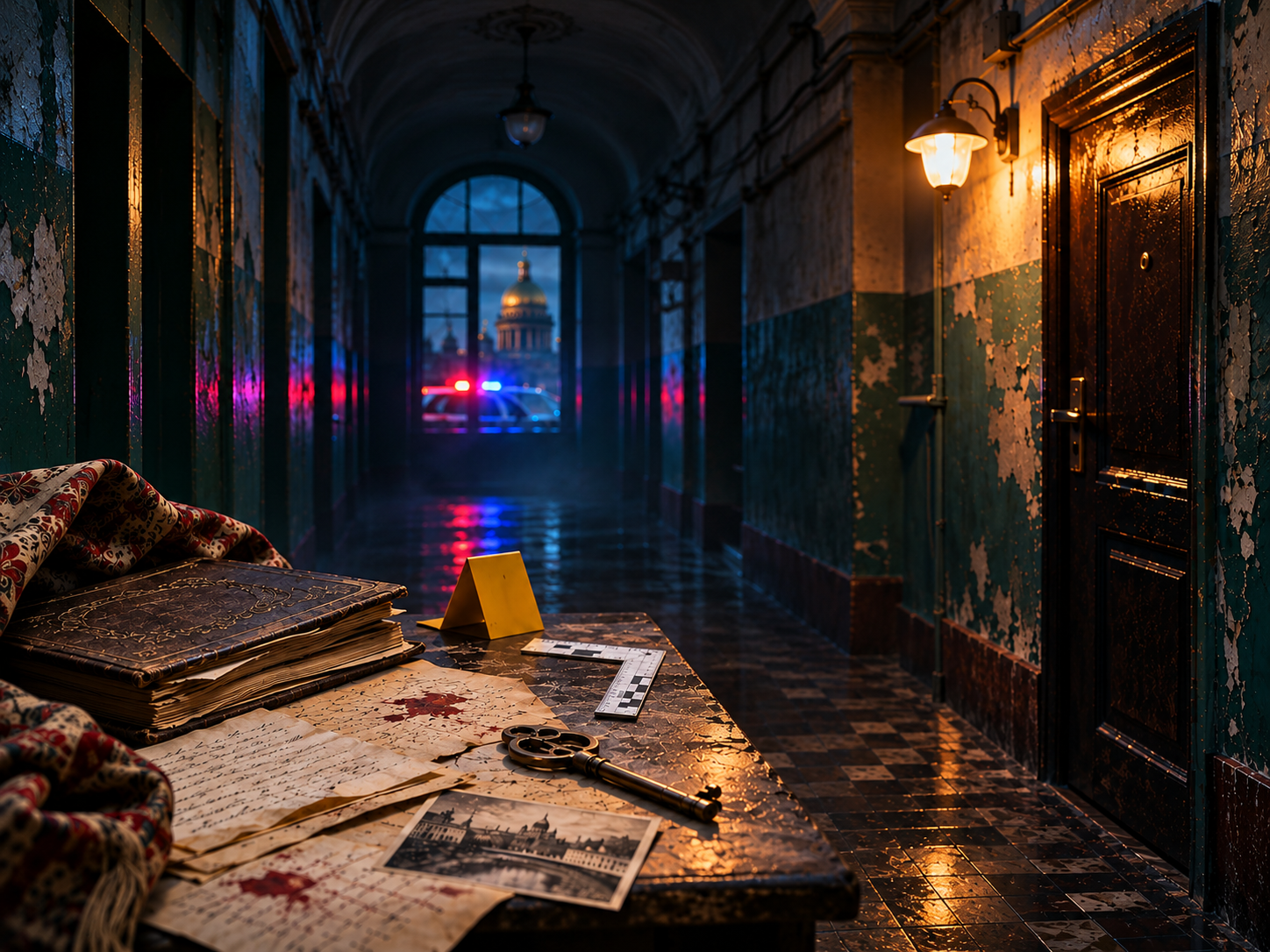
The investigation began in July 2015.
On 26 July, human remains were discovered near a residential building on Dimitrova Street in St. Petersburg.
Investigators identified the victim as Valentina Ulanova, a 79-year-old woman who had been acquainted with Samsonova.
According to investigators, Samsonova had been staying with Ulanova and helping care for her.
The authorities concluded that Ulanova had been killed on the night of 23 July. Investigators alleged that Samsonova had poisoned her and subsequently dismembered the body before disposing of the remains around the neighbourhood.
Reports also described surveillance footage that appeared to show Samsonova moving bags from the building.
She was detained shortly afterward.
What initially appeared to be the investigation of one murder soon attracted far greater attention.
The Diaries That Raised Terrifying Questions

During the investigation, reports emerged about diaries found among Samsonova's belongings.
Some early media accounts claimed that these notebooks contained descriptions of numerous killings. The diaries were reportedly written in Russian, English, and German.
The possibility that an elderly pensioner had recorded a series of violent crimes created a media sensation.
Some reports suggested that Samsonova might have been responsible for more than ten deaths.
But there was a crucial problem.
The existence of disturbing allegations did not mean that every alleged murder had been verified.
Russian investigators publicly cautioned against assuming that Samsonova was responsible for a long series of killings. They said they lacked objective evidence to establish the additional deaths described in media reports.
The diaries became one of the most mysterious aspects of the case, but they were not sufficient proof of a large number of murders.
A Suspicious Death from 2003

As investigators examined Samsonova's past, another case came under scrutiny.
Russian police reported that she was implicated in the death of a male lodger who had rented a room in her apartment in September 2003.
According to the police account, the man was killed following an argument, and his remains were subsequently disposed of.
The reported connection suggested that the events of 2015 might not have been an isolated incident.
However, the 2003 allegation must be distinguished from the later court proceedings. Public reporting did not establish a separate criminal conviction against Samsonova for that death.
The Mystery of Her Missing Husband
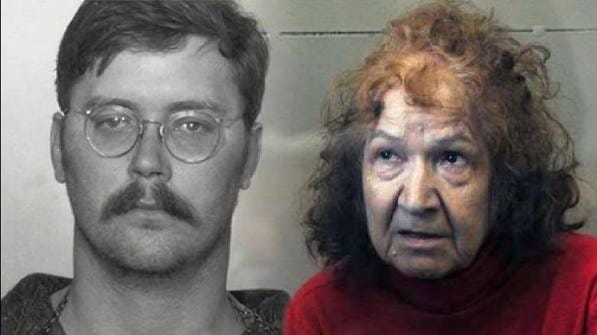
Another disturbing question concerned Samsonova's husband.
He had disappeared years before her arrest, and his whereabouts remained unknown.
As the 2015 investigation attracted attention, rumours began circulating that Samsonova might have been responsible for his disappearance.
Yet Russian investigators denied reports that his remains had been discovered.
No reliable public evidence established that Samsonova killed her husband.
His disappearance remained an unresolved part of her personal history rather than a proven murder attributed to her.
Was There Evidence of Cannibalism or Occult Rituals?

The case became even more sensational when some international media outlets reported that investigators were examining possible cannibalism and occult-related motives.
These suggestions contributed significantly to Samsonova's frightening public image.
However, such theories were not established as proven facts in the court outcome.
There is an important difference between a possibility considered during an investigation and a conclusion supported by evidence.
Although the rumours helped turn the case into an international horror story, they should not be presented as confirmed crimes.
What Happened to Tamara Samsonova?
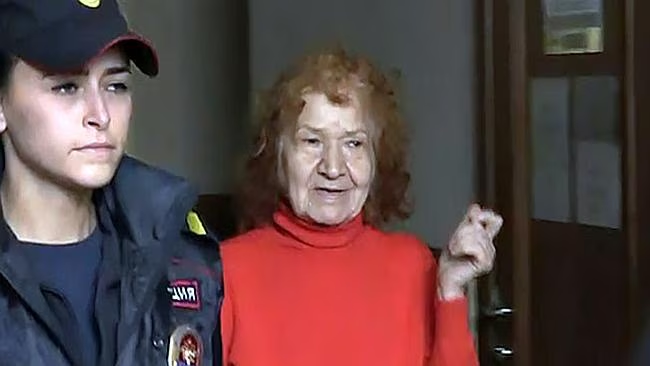
The legal proceedings ultimately took a different direction from what many readers might have expected.
A forensic psychiatric examination determined that Samsonova had a serious mental disorder, reported as paranoid schizophrenia.
On 27 March 2017, the Frunzensky District Court in St. Petersburg ordered compulsory psychiatric treatment.
She was released from criminal liability under the court's decision rather than receiving an ordinary prison sentence.
The proceedings centred on the killing of Valentina Ulanova. They did not establish that Samsonova was responsible for the many additional deaths alleged in sensational media coverage.
Her psychiatric diagnosis was a finding specific to her case; it should not be interpreted as suggesting that people with schizophrenia are generally violent.
The Truth Behind the Legend
The story of the St. Petersburg Baba Yaga is frightening enough without exaggeration.
A 79-year-old woman was killed. Investigators uncovered disturbing evidence, and a pensioner who had appeared to lead an ordinary life became the focus of a shocking criminal investigation.
Other allegations, including a suspected earlier killing, mysterious diary entries, and the disappearance of Samsonova's husband, added to the public fascination.
But not every accusation was proven.
That distinction matters because real people, real victims, and real families are involved.
The case also demonstrates how quickly a criminal investigation can become a modern urban legend when folklore, fear, and sensational headlines are combined.
A Dark Chapter in the City of White Nights
St. Petersburg is often celebrated for its elegance, literature, art, and history. Yet, like every great city, it has stories that reveal a much darker side of human experience.
Tamara Samsonova's case remains one of the city's most disturbing modern true-crime stories.
The nickname Baba Yaga made her internationally notorious, but the documented facts are more important than the legend.
Sometimes, the most frightening stories are not the ones involving supernatural creatures. They are the ones that begin in ordinary homes, behind ordinary doors.
Explore more stories about Russian history, culture, folklore, and lesser-known events with Russian On The Go (ROGO).
📌 Register Now for Free Consultation today - Click here!
Need Help with Documentation?
Navigating visa requirements and document preparation can be challenging, but Russian On The Go (ROGO) is here to help! We offer document translation, notarization, and visa interview preparation to make your transition smooth.
📌 Get Expert Assistance Today! Click here to learn more.