PROCEDURE FOR INTERACTING WITH THE POLICE IN RUSSIA

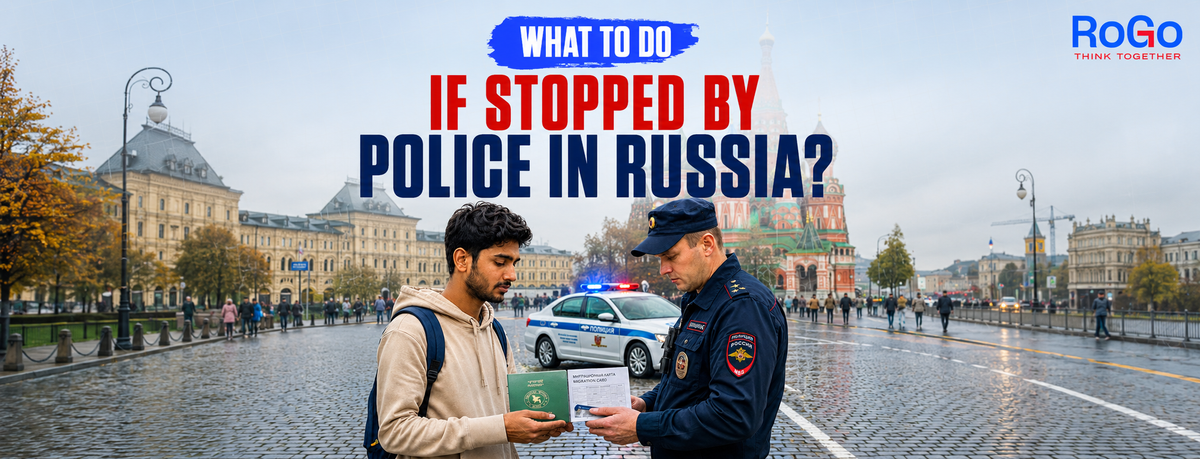
Important guidance for international students
|
SAVE THIS
POST. Keep your documents valid, stay calm, and immediately inform
your university if you are detained or taken to a police station. |
This guide provides general practical information. Always follow current Russian law and the official instructions of your university, embassy and legal representative.
1. Documents you should carry
International students should keep the following documents with them:
· Passport — and a valid visa, if you entered Russia under a visa regime.
· Migration card.
· Student ID card.
· Medical examination certificates.
· Confirmation of fingerprint registration (dactyloscopy).
· Valid dormitory accommodation agreement, where applicable.
· Foreigner’s identification card, if applicable.
· Valid migration registration.
2. Basic rules when speaking with police
· Remain calm, respectful and polite. A police officer on duty is an official representative of the Russian Federation.
· Do not argue, insult the officer, resist or make sudden movements.
· If you do not understand Russian well, clearly say so and request an interpreter.
· If an officer asks to check your documents, you may politely ask the legal reason for the check.
|
Useful phrase «Я недостаточно хорошо понимаю русский язык. Пожалуйста,
предоставьте переводчика.» “I do not understand Russian
well enough. Please provide an interpreter.” |
3. When police may check your identity documents
Police may request your identity documents in situations established by federal law, including:
· For the protection of public safety.
· When there are grounds to suspect that a person has committed a crime.
· When there are grounds to believe that a person is wanted.
· When there are grounds to initiate an administrative-offence case.
Remember: you may politely ask the officer to explain the grounds for the document check.
4. Personal inspection and inspection of belongings
Police may conduct a personal inspection or inspect belongings in circumstances permitted by law. Important safeguards include:
· A protocol must be prepared for a personal inspection.
· A personal inspection should generally be carried out by a person of the same sex and in the presence of two witnesses of the same sex who are not police officers.
· Inspection of hand luggage or other belongings may be conducted in the presence of two witnesses or using video recording.
· Passenger-security inspections may take place at railway stations, airports and similar transport facilities.
· A search or inspection may also be conducted where there are grounds to believe that a detained person possesses weapons, ammunition, explosives, narcotic substances, toxic substances or radioactive materials.
|
Important If any item is found that does
not belong to you, do not touch it. Immediately state that it is not yours
and ask for your statement to be included in the protocol. |
5. If the police stop or detain you
The officer should identify themself, state their position and rank, present their service identification upon request, and explain the reason for the stop or detention.
You may be taken to a police station to prepare an administrative-offence protocol, including when:
· You do not have an identity document and have not reported it lost to the police.
· A possible administrative violation connected with your stay in Russia has been identified.
6. What to do if asked to go to a police station
1. Ask why you are being detained or taken to the station.
2. Ask for the name and address of the police station.
3. Inform your university, embassy, family or friends where you are and where you are being taken.
4. If the matter concerns your visa, migration registration or legal stay in Russia, immediately call your university’s International Student Support emergency contact.
5. Notify your dormitory through the duty officer or passport office.
|
When calling the university, report Where and at what time the
detention occurred. The police station to which
you were taken. The stated reason for the
detention. The officer’s name, rank or
badge number, if known. Any other important
circumstances. |
7. The detention protocol
A protocol must be prepared upon administrative detention, and you must be given a copy. It should include:
· The date, time and place of detention.
· The legal grounds and stated reasons for detention.
· The name and signature of the officer who prepared the protocol.
Read the protocol carefully before signing. Do not sign a document that you do not understand without first requesting an interpreter and clarification.
|
Statements you may write in the remarks section «С протоколом не согласен.» —
I do not agree with the protocol. «Переводчик не предоставлен.»
— An interpreter was not provided. «Не дали возможности совершить
телефонный звонок.» — I was not allowed to make a telephone call. «Русским языком владею
недостаточно.» — I do not have sufficient command of Russian. |
8. Your rights when detained
· To receive legal assistance and legal advice.
· To request and use the services of an interpreter before signing documents or giving explanations.
· To insist that the interpreter translate the complete text, not only a summary.
· To inform your university, family or friends about the detention within the legally prescribed period. You may ask the police officer to make the call on your behalf, including to your embassy.
· To refuse to give explanations.
|
Interpreter rule Request an interpreter
immediately. Do not wait until after signing the protocol. If no interpreter is provided, write: «Я недостаточно владею русским языком,
переводчик не предоставлен.» |
9. If you believe the police acted unlawfully
1. Remain calm and comply with lawful instructions. Do not physically resist.
2. Record or remember the officer’s badge number, name, rank and patrol-car details, if possible.
3. Write down the time, place and sequence of events as soon as possible.
4. Call 112 and report the alleged violation. Ask a Russian-speaking person for assistance when necessary.
5. Contact your university, embassy and a qualified lawyer.
10. Complete these emergency contacts now
|
Contact |
Number / details |
|
Emergency services |
112 |
|
University international office |
________________________________ |
|
University emergency contact |
________________________________ |
|
Dormitory duty officer / passport office |
________________________________ |
|
Embassy / consulate |
________________________________ |
|
Trusted friend or family member |
________________________________ |
|
Lawyer / legal support |
________________________________ |
STAY CALM • KNOW YOUR RIGHTS • CONTACT YOUR UNIVERSITY
Share this information with other international students.
Whether you’re a new international student or someone who has lived in Russia for years, this factory tour is an experience worth adding to your Moscow bucket list.
📌 Register Now for Free Consultation today - Click here!
Need Help with Documentation?
Navigating visa requirements and document preparation can be challenging, but Russian On The Go (ROGO) is here to help! We offer document translation, notarization, and visa interview preparation to make your transition smooth.
📌 Get Expert Assistance Today! Click here to learn more.